Pakistani Physiotherapist's Guide to Australia: Complete 2026 APEP Pathway
The complete 2026 guide for Pakistani DPT graduates seeking physiotherapy registration in Australia. Fees in ₨ and AUD, 5-step APEP pathway, AHPRA English requirements (6.5 writing), visa subclasses, realistic timeline, and common mistakes to avoid.
The GdayPhysiotherapist Team
13 April 2026
13 min read
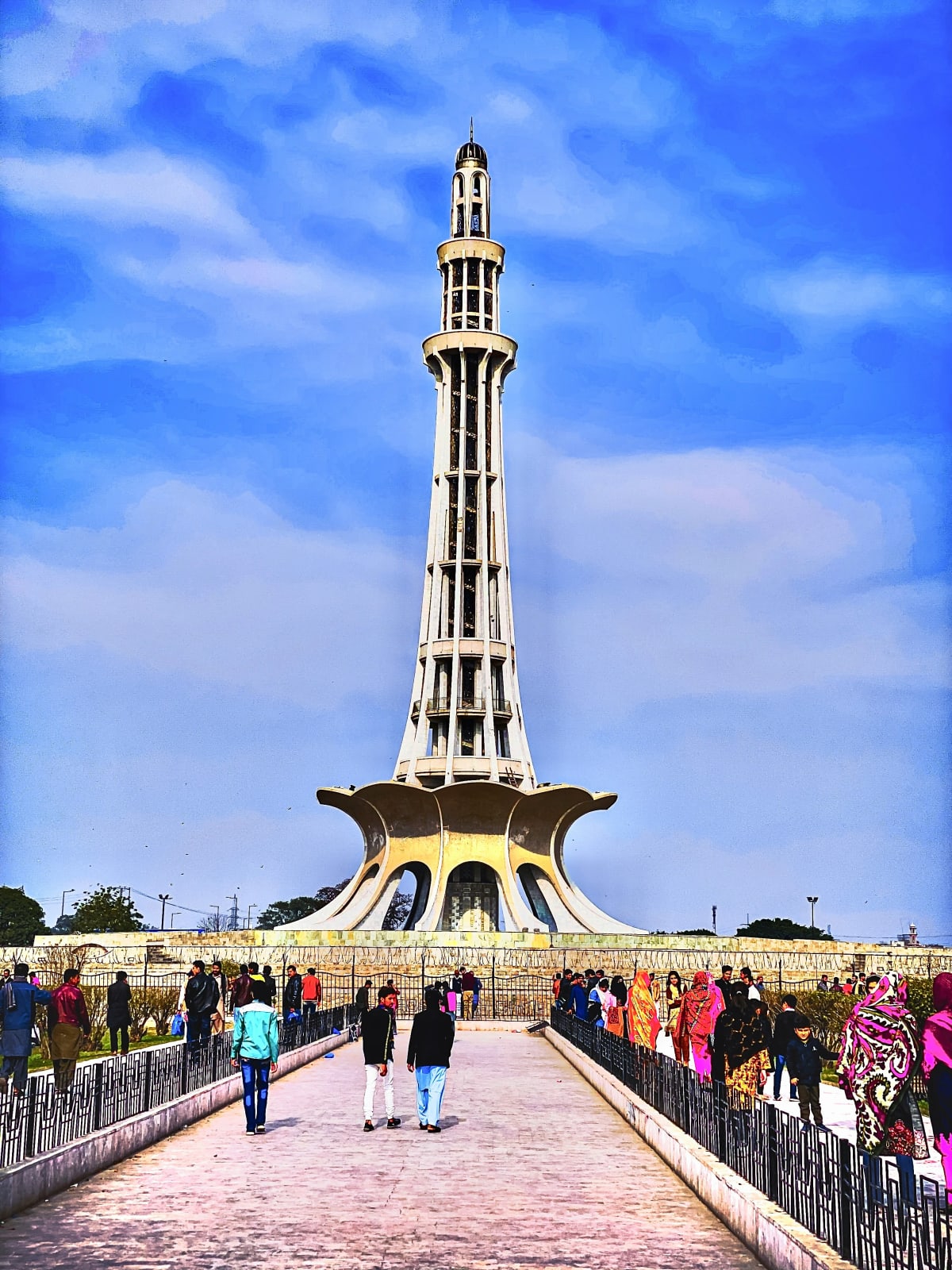
The Pakistani Physiotherapist's Complete Guide to Practising in Australia (2026)
Fee update, 24 September 2026: the APC fees change on 21 October 2026. From that date: full APEP pathway $8,321 (up from $7,814), Cultural Safety Training $242 (up from $235), Written Assessment $2,078 (up from $2,017) and Clinical Workshop $1,903 (up from $1,464). Eligibility Assessment ($1,170) and Capability Assessment ($2,928) do not change. Fees paid on or before 20 October 2026 are at the earlier amounts. Confirm the current fee on the APC website before you pay.
Quick answer: Pakistani DPT graduates cannot register directly as physiotherapists in Australia. Degrees from Pakistani institutions are not auto-recognised by AHPRA, so Pakistani physios must complete the Australian Physiotherapy Entry Pathway (APEP) — a 5-step process administered by the Australian Physiotherapy Council (APC) with total APC fees of AUD $7,814 (around ₨15.4 lakh) — plus meet AHPRA English language standards and visa requirements. The APEP is ~80% remote, replacing the old Standard Assessment Pathway on 1 October 2025, and fast-track candidates can complete it in as little as 6 months.
This guide walks you through every step, every rupee, and every realistic deadline from a Pakistani DPT graduate to a physiotherapist practising in Sydney, Melbourne, Brisbane or regional Australia.
Can Pakistani DPT graduates work as physiotherapists in Australia?
Yes — but not directly. Pakistan's 5-year Doctor of Physical Therapy (DPT) degree (10 semesters, minimum 175 credit hours under the HEC unified curriculum) is a clinically rigorous qualification taught in English at over 100 HEC-recognised institutions nationwide. However, AHPRA and the Australian Physiotherapy Council (APC) do not auto-recognise Pakistani DPT degrees for direct registration.
Why? Pakistan's physiotherapy regulatory framework is still maturing. The profession is represented by the Pakistan Physical Therapy Association (PPTA) (around 2,510 members, a member of World Physiotherapy / WCPT since 2011), and degrees are recognised through the Higher Education Commission (HEC). The Allied Health Professionals Council Act 2022 (Act No. IX of 2022, notified 3 March 2022) established a national Allied Health Professionals Council under the Ministry of National Health Services, Regulations and Coordination — but it is not yet fully functional, and no standalone statutory physiotherapy council exists. PPTA membership and HEC degree recognition are mandatory to practise in Pakistan, but until the Allied Health Council becomes operational and mutual recognition is negotiated with AHPRA, Pakistani physios who want to work in Australia must complete the APC's assessment pathway — the APEP — before they can register with AHPRA.
The good news? The APEP is fundamentally friendlier to overseas physios than the vet-pathway equivalent:
- ~80% remote delivery — only the final Clinical Workshop requires travel to Melbourne
- Total APC fees $7,814 — roughly 40% cheaper than the vet AVE pathway
- Fast-track ~6 months — compared to 18–30 months for vets
- IELTS unchanged at 7.0 with 6.5 writing — but OET, PTE, TOEFL and Cambridge minimum scores all changed on 23 April 2026
What is APEP and why do Pakistani physios need to do it?
The Australian Physiotherapy Entry Pathway (APEP) is the assessment pathway for internationally qualified physiotherapists seeking registration with AHPRA and the Physiotherapy Board of Australia. It is administered by the Australian Physiotherapy Council (APC) — the accreditation body for Australian physiotherapy education and the assessment authority for overseas-trained physios.
APEP replaced the old Standard Assessment Pathway on 1 October 2025 and was explicitly designed around three principles:
- Remote-first delivery — ~80% of the pathway is delivered online to reduce travel costs
- Competency-based assessment — testing clinical reasoning, safety, communication and professionalism
- Faster workforce entry — enabling candidates to progress to the Australian workforce more quickly
Once you complete APEP successfully, you become eligible to apply for general registration with AHPRA via the Physiotherapy Board of Australia, which allows you to practise anywhere in Australia.
APEP fees for Pakistani physiotherapists in 2026 (₨ and AUD)
All fees below are from the official APC Schedule (physiocouncil.com.au) effective 5 January 2026 (3% CPI increase applied), converted at 1 AUD ≈ ₨197 (April 2026). Verify the exchange rate the day you transfer funds — the PKR/AUD rate has been volatile.
| APEP Stage | AUD | Approximate PKR |
|---|---|---|
| Eligibility Assessment | $1,170 | ~₨2,30,500 |
| Cultural Safety Training (CST) | $235 | ~₨46,300 |
| Written Assessment | $2,017 | ~₨3,97,300 |
| Capability Assessment | $2,928 | ~₨5,76,800 |
| Clinical Workshop (Melbourne) | $1,464 | ~₨2,88,400 |
| Total APEP pathway | $7,814 | ~₨15,39,400 |
Additional costs to budget for:
- AHPRA registration fee: AUD $211 annual (set by the Physiotherapy Board of Australia for 2025/26)
- English language test: OET (~AUD $587 / ₨1,15,600), IELTS Academic (~AUD $495 / ₨97,500), PTE Academic (~AUD $445 / ₨87,700), or TOEFL-iBT (~AUD $370 / ₨72,900)
- APC Skills Assessment for migration (separate from APEP): ~AUD $1,674 / ~₨3,29,800
- Document verification and HEC attestation in Pakistan: ~₨15,000–25,000
- Visa application (subclass 189 or 190): ~AUD $4,640 / ~₨9,14,000 in 2026 — verify at Home Affairs
- Travel and accommodation for the Melbourne Clinical Workshop: ~AUD $2,000–3,500 / ₨3.9–6.9 lakh (single trip — this is the ONLY travel required)
- APEP preparation resources: AUD $300–1,500 depending on provider
Realistic total budget: ₨27,00,000 to ₨42,00,000 (AUD $14,000–21,000) from start to first Australian paycheck.
That is significantly cheaper than the vet AVE pathway (~₨45–75 lakh), making physio one of the most accessible Australian healthcare pathways for Pakistani candidates.
Australian physiotherapist salaries in 2025–2026:
- Entry-level: AUD $75,800–85,000 (~₨1.49–1.67 crore/year)
- Mid-career: AUD $93,000–110,000 (~₨1.83–2.17 crore/year)
- Senior/specialist: AUD $120,000–160,000+ (~₨2.36–3.15 crore/year)
This compares to typical Pakistani physiotherapy salaries of ₨5–14 lakh per year (PKR 40,000–60,000/month for fresh DPT graduates, rising to PKR 70,000–120,000/month with 3–5 years of experience). The salary uplift is roughly 10–25×, and most Pakistani physios recover their APEP investment within 4–6 months of starting work in Australia.
The 5-step APEP pathway explained
Step 1 — Eligibility Assessment (~AUD $1,170 / ₨2.3 lakh)
You submit your DPT degree certificate, transcripts from all 10 semesters, detailed syllabus, internship completion certificate, PPTA membership letter, HEC degree attestation, and proof of identity to APC. Processing takes 2–3 weeks. APC compares your DPT curriculum against Australian physiotherapy entry-level competencies and confirms whether you can progress to the next stage.
Step 2 — Cultural Safety Training (~AUD $235 / ₨46,300)
A mandatory online training module covering Aboriginal and Torres Strait Islander health contexts, cultural humility, and culturally safe practice. It is non-examinable but must be completed before progressing. Processing: 1–2 weeks.
Step 3 — Written Assessment (~AUD $2,017 / ₨3.97 lakh)
A two-paper computer-based MCQ exam held on the same day, four times a year. Each paper is 2 hours long, so the total exam time is 4 hours. Each paper contains 15 clinical case scenarios with 4 multiple-choice questions per case — that is 60 questions per paper, 120 questions in total, all based on real-life Australian patient scenarios. The Written Assessment is available remotely from home in Pakistan or in-person at APC test centres in Melbourne and Sydney.
Content tested: musculoskeletal, neurological, cardiopulmonary, paediatric and geriatric physiotherapy, plus Australian practice fundamentals, ethics and safety.
Resit fee: $2,017. You can re-sit at the next available sitting if needed.
Step 4 — Capability Assessment (~AUD $2,928 / ₨5.77 lakh) 🆕
This is the newest and most distinctive part of APEP — an oral exam delivered online, 1:1 with one experienced Australian physiotherapist assessor over video call. It runs three short cases and one long case, and takes about two hours in total, of which 1.5 hours is exam time. It tests clinical reasoning, safety judgement, professional communication and decision-making in realistic patient scenarios.
One detail candidates routinely get wrong: it is not open-book throughout. The APC permits Google and books during the reading time for the long case only — the three short cases have no reading time at all. Prepare for recall under time pressure on the short cases, and use the long-case reading window deliberately.
You sit it from your home in Pakistan. No travel required.
Step 5 — Clinical Workshop (~AUD $1,464 / ₨2.88 lakh)
The only face-to-face component. A full-day small-group practical assessment held at APC's Melbourne facility — a combination of hands-on physiotherapy assessment stations, technique demonstration and examiner-facilitated clinical discussions.
This is the only time you need to travel. Budget a ~5-day trip to Melbourne (workshop day plus buffer for jet lag and travel delays).
Total APEP fast-track timeline: ~6 months for candidates who progress through each stage without delays.
English language requirements for Pakistani physiotherapists
AHPRA's English Language Skills Registration Standard applies to physiotherapy registration alongside every other regulated health profession. On 23 April 2026 the National Boards updated the minimum scores for every accepted test except IELTS. Which set applies to you depends on when you sat the test, not when you lodge your application.
Tests sat on or after 23 April 2026:
| Test | Overall | Listening | Reading | Writing | Speaking |
|---|---|---|---|---|---|
| IELTS Academic | 7.0 | 7.0 | 7.0 | 6.5 | 7.0 |
| OET | — | 350 | 360 | 350 | 360 |
| PTE Academic | 63 | 58 | 59 | 60 | 76 |
| TOEFL iBT | 91 | 22 | 22 | 23 | 24 |
| Cambridge C1 Advanced | 178 | 175 | 179 | 180 | 194 |
| Cambridge C2 Proficiency | 185 | 185 | 185 | 176 | 185 |
Tests sat on or before 22 April 2026 are judged against the previous scores: IELTS 7.0 / 7.0 / 6.5 / 7.0, OET B / B / C+ / B, PTE 66 / 66 / 56 / 66, TOEFL iBT total 94, and Cambridge 185 overall with 176 writing. If you combine two sittings that straddle the change, each sitting is judged against the table in force on the day you sat it.
What actually moved on 23 April 2026:
- IELTS did not change. Still 7.0 overall with 6.5 writing.
- OET moved from letter grades to numeric scores, and the writing bar rose steeply — 350, where the old C+ was 300. Reading and speaking also rose, to 360.
- PTE fell overall to 63 but raised speaking to 76, well above the old 66. Listening and reading eased to 58 and 59.
- TOEFL iBT total fell to 91, with listening and reading down to 22 and speaking up to 24.
- AHPRA states this is a concordance realignment with the Department of Home Affairs, not a change to the level of English required.
Three rules catch people out whatever date they sat: at-home and remotely proctored versions are not accepted (the sole exception is the OET computer-based test taken at a test centre); results are valid for two years before the date you lodge; and you may combine two sittings within a 12-month period, with IELTS uniquely allowing a One Skill Retake within 60 days.
Source: Ahpra, "Accepted English language tests", and the National Boards' transition arrangements policy for changes to minimum scores — April 2026. Verified 26 August 2026.
For Pakistani DPT graduates: Pakistan is not on AHPRA's "recognised countries" list for automatic English exemption (that list is limited to Australia, Canada, New Zealand, Republic of Ireland, the United Kingdom and the United States — South Africa was removed effective 18 March 2026). However, Pakistani DPT programs at HEC-recognised universities like DUHS Karachi, Riphah International Islamabad, UOL Lahore, Bahria, Ziauddin and Isra are delivered in English, so most Pakistani candidates meet the test-based requirement comfortably. Note that the OET writing bar rose on 23 April 2026, from C+ to 350, so check the current table before assuming OET is the easier route.
Recommendation: most Pakistani DPT graduates find OET the most natural fit because the scenarios mirror healthcare communication you do daily. PTE delivers the fastest results turnaround. IELTS is the most widely available across Pakistan.
Common gap: the writing band is where most Pakistani candidates lose marks. With IELTS writing still at 6.5 but OET writing now at 350, budget 4–6 weeks of academic-register writing practice before your first attempt.
Visa pathways from Pakistan to Australia for physiotherapists
Physiotherapists sit under ANZSCO code 252511 — Skill Level 1 — and appear on Australia's key skilled occupation lists: the Medium and Long-term Strategic Skills List (MLTSSL) (governing points-tested skilled visas) and the Core Skills Occupation List (CSOL) — introduced in December 2024 and governing employer-sponsored visas. That makes Pakistani physiotherapists eligible for multiple subclasses:
- Subclass 189 — Skilled Independent: Permanent residency, no sponsor needed. 65 points is the minimum EOI lodgement threshold, but in 2026 the government uses a 4-tier invitation priority system — healthcare occupations (including physiotherapists) sit in Tier 1, the highest priority level, meaning invitations are typically issued from 75–80 points onwards, well below the 85–95+ points most non-priority occupations require. This is the gold-standard permanent residency pathway.
- Subclass 190 — State Nominated: Permanent residency with state sponsorship. Tasmania, South Australia, Victoria and the Northern Territory regularly sponsor physios due to regional shortages. Adds 5 points to your EOI.
- Subclass 491 — Skilled Work Regional: 5-year provisional visa leading to PR (subclass 191). Lower points threshold but requires regional living.
- Subclass 482 — Skills in Demand (SID): Employer-sponsored temporary visa (2–4 years). Replaced the old Temporary Skill Shortage (TSS) visa on 7 December 2024 — same subclass number, new three-stream structure. Physios apply through the Core Skills stream.
- Subclass 186 — Employer Nominated Scheme: Permanent, employer-sponsored via the Direct Entry stream (uses CSOL).
Important: before lodging a skilled visa, you need a positive APC Skills Assessment (~AUD $1,674, separate from APEP). The typical order is: APC Eligibility → CST → Written → Capability → Clinical Workshop → APC skills assessment for migration → visa application → arrival and AHPRA registration.
Pakistani applicants should also be aware that police clearance, medical examinations, and HEC document attestation add time to the visa stage. Start the HEC attestation process at the Higher Education Commission (HEC) and Ministry of Foreign Affairs in Islamabad as soon as you decide to pursue APEP — it commonly adds 4–6 weeks.
Realistic timeline from DPT Pakistan to registered Australian physiotherapist
| Month | Milestone |
|---|---|
| 0 | Decision to pursue Australian registration; begin English prep |
| 1–3 | Sit English test (IELTS/OET/PTE), receive result |
| 3–4 | Gather documents (DPT certificate, transcripts, syllabus, internship letter, PPTA membership, HEC attestation) |
| 4 | Submit Eligibility Assessment |
| 4–5 | APC Eligibility approval (2–3 weeks) |
| 5 | Complete Cultural Safety Training (1–2 weeks) |
| 5–8 | Written Assessment preparation (150–300 study hours) |
| 8 | Sit Written Assessment (held 4×/year, remotely from Pakistan) |
| 8–9 | Written Assessment result |
| 9–10 | Capability Assessment preparation and sitting (1.5hr oral, remote) |
| 10 | Capability result |
| 11 | Fly to Melbourne for Clinical Workshop (full-day) |
| 11–12 | APC skills assessment for migration visa |
| 12–14 | Visa application, NICOP/police clearance, medicals |
| 14–16 | Arrive in Australia, register with AHPRA, start working |
Typical fast-track total: 12–16 months from decision to first Australian paycheck. Candidates with strong English (test-ready), first-attempt passes and efficient document handling can compress this to 9–12 months.
Common mistakes Pakistani APEP candidates make — and how to avoid them
- Underestimating Australian practice context. APEP tests Australian-specific practice standards (Aboriginal and Torres Strait Islander cultural safety, Australian Physiotherapy Association competency framework, Medicare/private billing, telehealth standards). Build this into your prep — don't assume DPT knowledge translates directly.
- Treating the Capability Assessment as a "viva." It is a clinical reasoning conversation, not a recitation exam. The examiner wants to hear your thinking process — how you analyse a patient, justify decisions, and communicate safely. Practise "think-aloud" reasoning with a mock examiner before sitting it.
- Delaying HEC attestation. Foreign credential verification through HEC and the Ministry of Foreign Affairs in Islamabad takes 4–6 weeks. Start the same day you decide to pursue APEP — do not wait.
- Weak academic writing. Pakistani candidates frequently score strong in IELTS/OET listening, reading and speaking, then drop the writing band. With IELTS writing still at 6.5 but OET writing now at 350, practise academic-register writing for 4–6 weeks before your first test.
- Skipping PPTA documentation. Some APC reviewers ask for evidence of PPTA membership and clinical practice history. Get a formal letter from PPTA confirming your membership status before submitting your Eligibility Assessment.
- Trying to self-study with outdated resources. APEP is new (launched Oct 2025) — most resources online still reference the old Standard Assessment Pathway. Use APEP-specific preparation, not repurposed old material.
Your next step
If you are serious about practising physiotherapy in Australia, the single highest-leverage move you can make today is to start a structured APEP-specific study plan. Pakistani DPT clinical foundations are strong — you just need to translate them into the APC competency framework and practise the Capability Assessment reasoning style.
Start your APEP preparation with GdayPhysio — built specifically for internationally qualified physiotherapists.
You may also want to read:
- APEP: Complete 2025–2026 Guide for International Physiotherapists
- APEP Capability Assessment 2026: What to Expect
- APEP Clinical Workshop 2026: What Happens on the Day
- APC Written Assessment 2026: What to Actually Expect
- APC Assessment Fees Increase 3% from January 2026
- Physiotherapy Registration Fees 2025–2026: AHPRA Fee Announcement
This guide is based on official APC and AHPRA documentation, the APC Fees and Processing Times schedule (effective 5 January 2026), the AHPRA English Language Skills Registration Standard and the minimum test scores in force from 23 April 2026, the Physiotherapy Board of Australia 2025/26 fee announcement, the HEC unified DPT curriculum, and the Australian Department of Home Affairs Skilled Occupation List. Fees and requirements change — always verify current information with APC, AHPRA, HEC and Home Affairs before making financial or migration decisions. GdayPhysio is not affiliated with APC, AHPRA, HEC or PPTA.
Frequently Asked Questions
Is a DPT from Pakistan enough to register as a physiotherapist in Australia?
No. Pakistani DPT degrees are not auto-recognised by AHPRA. Pakistani physios must complete the Australian Physiotherapy Entry Pathway (APEP) — administered by the Australian Physiotherapy Council — before they can register with AHPRA and practise in Australia.
How much does APEP cost for Pakistani physiotherapists in 2026?
APC APEP fees total approximately AUD $7,814 (around ₨15.4 lakh at 1 AUD ≈ ₨197): Eligibility $1,170, Cultural Safety Training $235, Written Assessment $2,017, Capability Assessment $2,928, Clinical Workshop $1,464. Plus AHPRA registration AUD $211 annual, English test, visa and Melbourne travel. A realistic all-in budget is ₨27–42 lakh. From 21 October 2026 the APC fees change: full APEP pathway $8,321 (up from $7,814), Cultural Safety Training $242 (up from $235), Written Assessment $2,078 (up from $2,017) and Clinical Workshop $1,903 (up from $1,464). Eligibility Assessment ($1,170) and Capability Assessment ($2,928) do not change. Fees paid on or before 20 October 2026 are at the earlier amounts.
Which Pakistani DPT institutions are recognised by APC?
No Pakistani institution is on AHPRA's auto-recognition list. However, all HEC-recognised DPT programs from over 100 Pakistani universities — including DUHS Karachi, Riphah International University Islamabad, Bahria University, Ziauddin University Karachi, Isra University, University of Lahore, Superior University, and University of Central Punjab — are eligible to apply for the APEP pathway. APC assesses each candidate individually.
Do Pakistani physiotherapists need to sit an English test?
Yes, in most cases. Pakistan is not on AHPRA's automatic "recognised countries" list (which is limited to Australia, Canada, New Zealand, Republic of Ireland, the United Kingdom and the United States). You must sit IELTS, OET, PTE Academic or TOEFL iBT and meet the minimum scores. The good news: as of 18 March 2025, the writing component minimum was reduced (IELTS 7.0 → 6.5, OET B → C+, PTE writing → 56), making the test significantly more achievable.
How long does APEP take for Pakistani candidates?
Most Pakistani candidates complete the pathway in 12–16 months from decision to Australian registration, including English testing, HEC document attestation, APEP completion and visa processing. Fast-track candidates with strong English and first-attempt passes can finish in 9–12 months. HEC attestation in Islamabad can add 4–6 weeks, so start that process early.
Do I need to travel to Australia for APEP?
Only once — for the final Clinical Workshop held at APC's Melbourne facility (full-day, face-to-face). The Written Assessment can be sat remotely from Pakistan or in-person in Melbourne and Sydney. The other three stages (Eligibility, Cultural Safety Training, Capability Assessment) are delivered fully remotely.
What visa can a Pakistani physiotherapist apply for?
Physiotherapists are ANZSCO 252511, listed on both the MLTSSL and the Core Skills Occupation List (CSOL). Eligible visas include subclass 189 (Skilled Independent, permanent), 190 (State Nominated, permanent), 491 (Regional Provisional), 482 (Skills in Demand, employer-sponsored temporary), and 186 (Employer Nominated, permanent). Healthcare occupations including physios are in Tier 1 of the new invitation priority system and typically receive 189 invitations from 75–80 points.
What is the salary of a physiotherapist in Australia compared to Pakistan?
Australian physiotherapists earn AUD $75,800–85,000 per year at entry level (~₨1.49–1.67 crore), AUD $93,000–110,000 mid-career (~₨1.83–2.17 crore), and AUD $120,000–160,000+ at senior level (~₨2.36–3.15 crore). This compares to typical Pakistani physiotherapy salaries of PKR 40,000–60,000 per month (~₨5–7 lakh/year) for fresh DPT graduates and PKR 70,000–120,000 per month (~₨8–14 lakh/year) for 3–5 years of experience. The uplift is roughly 10–25×, and most Pakistani physios recover their APEP investment within 4–6 months of starting work in Australia.
Related Articles
Filipino Physiotherapist's Guide to Australia: Complete 2026 APEP Pathway
The complete 2026 guide for Filipino BSPT graduates seeking physiotherapy registration in Australia. Fees in ₱ and AUD, 5-step APEP pathway, AHPRA English exemption pathways, visa subclasses, realistic timeline, and common mistakes to avoid.
14 min read

New Zealand Physiotherapist Moving to Australia 2026 - Complete Registration Guide
Complete guide for New Zealand physiotherapists registering in Australia via Trans-Tasman Mutual Recognition. No exams required - fast-track your Australian registration.
4 min read